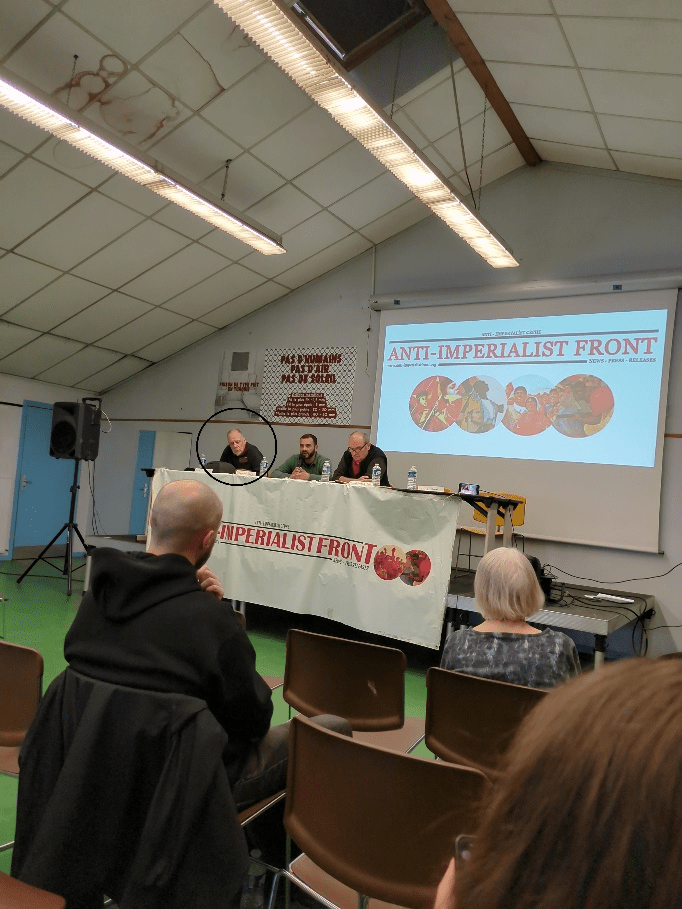
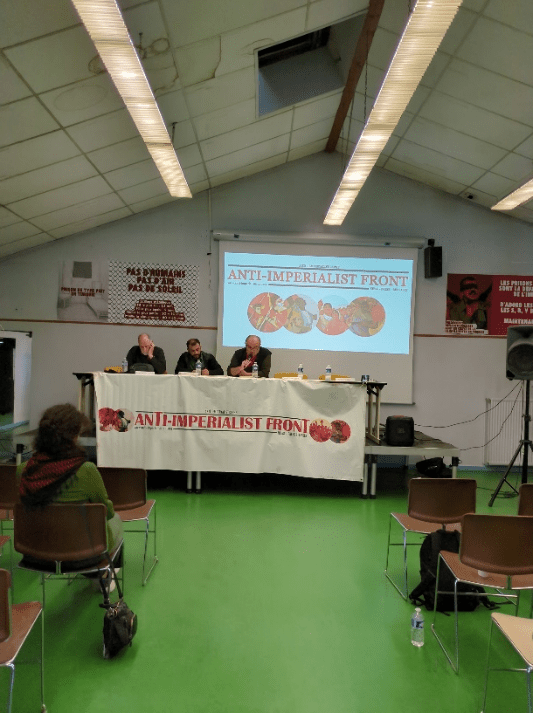
On April 11, the Anti-Imperialist Front organized its first conference for political prisoners in Paris.
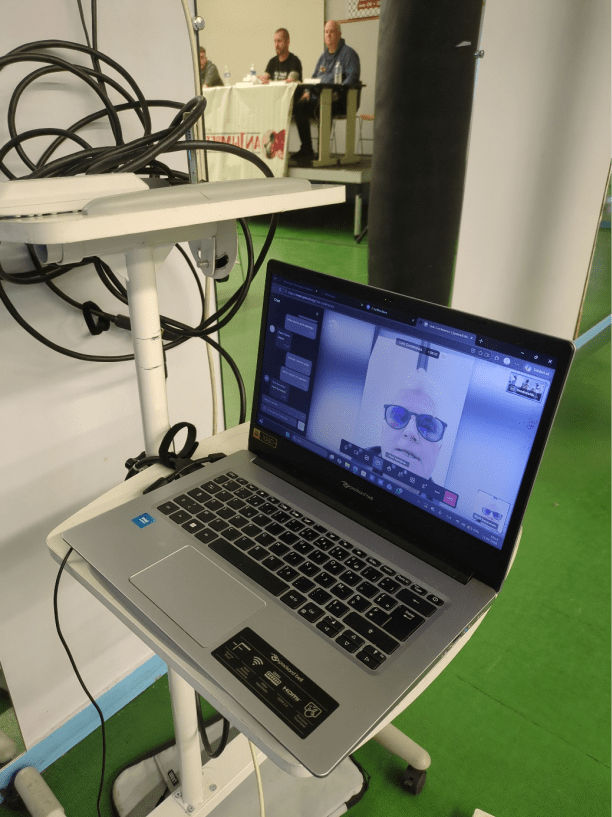
The conference, which lasted from morning until evening, brought together numerous organizations from European countries. From outside Europe, OLEP from Mexico shared a video, and Noel Hamrahan, the lawyer for Mumia Abu-Jamal from the United States, participated online.
An exhibition depicting the “pit-type” and “barbed wire” prisons was displayed. We are sharing this in the attachment.
The conference was opened with a speech by Zehra Kurtay, who has become a symbol of resistance in Paris after undertaking a 219-day indefinite hunger strike. In her speech, she addressed the resistance movements in Turkish prisons. She emphasized that this represents a process spanning from the 7-year-long Death Fast resistance to today’s Pit-type prisons.
Revolutionary prisoners, who are being isolated from the outside world, are turning their bodies into weapons. Kurtay emphasized that fascism can never prevail in Turkey for two reasons.
First, there are the revolutionaries; second, there is international solidarity.
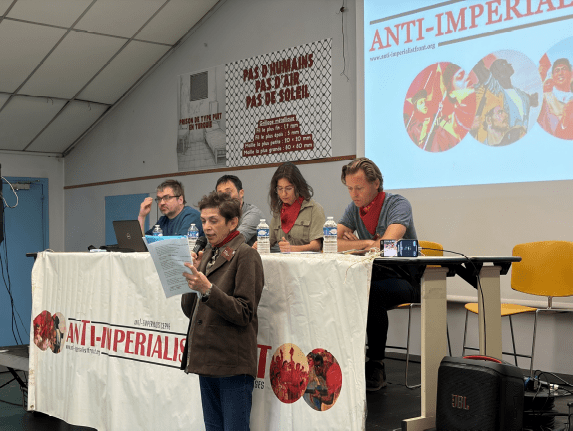
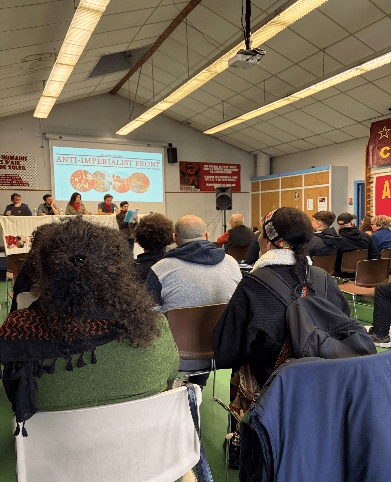
First Panel
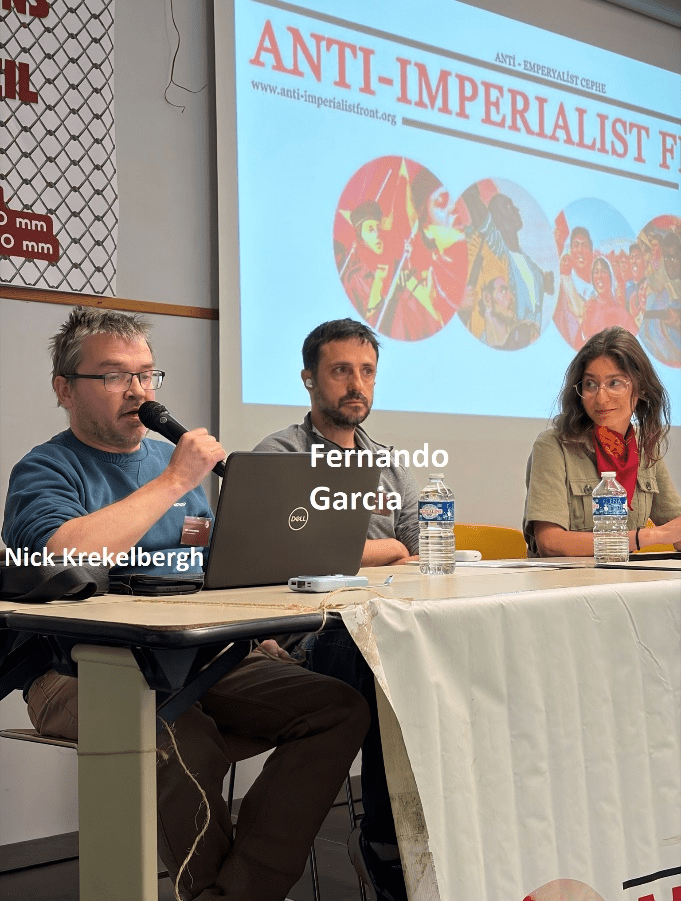
The first panel discussed the testimony of the fact-finding delegation that travelled to Turkey to research pit-type isolation prisons, which have been the subject of long-term hunger strikes.
The delegation members shared their experiences of being hastily detained and deported without any justification, less than 24 hours after arriving in Turkey.
Nick Krekelbergh, Fernando Garcia, and Jean Pascal Graziani shared their experiences.
Tatiana Desyatova, a member of the delegation from Russia who was unable to attend in person due to not having a European visa, joined the live broadcast online.
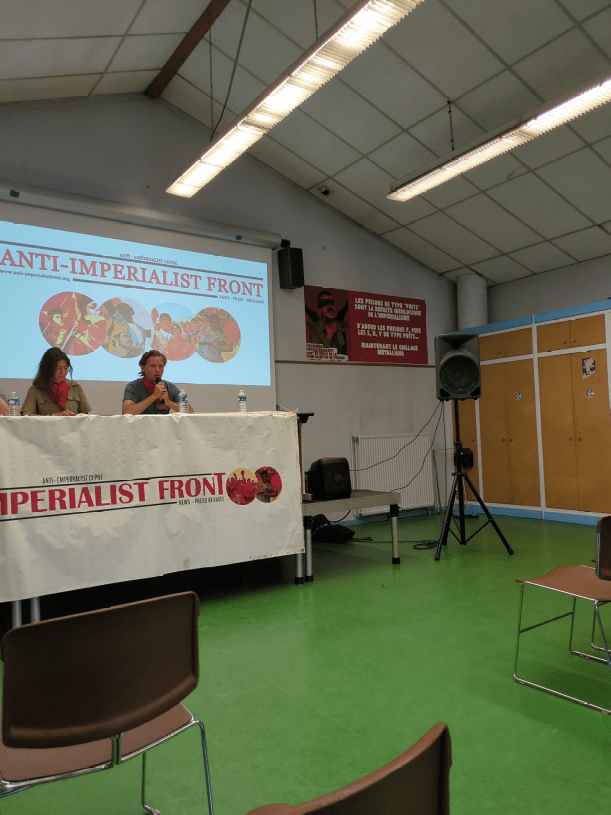
Second panel
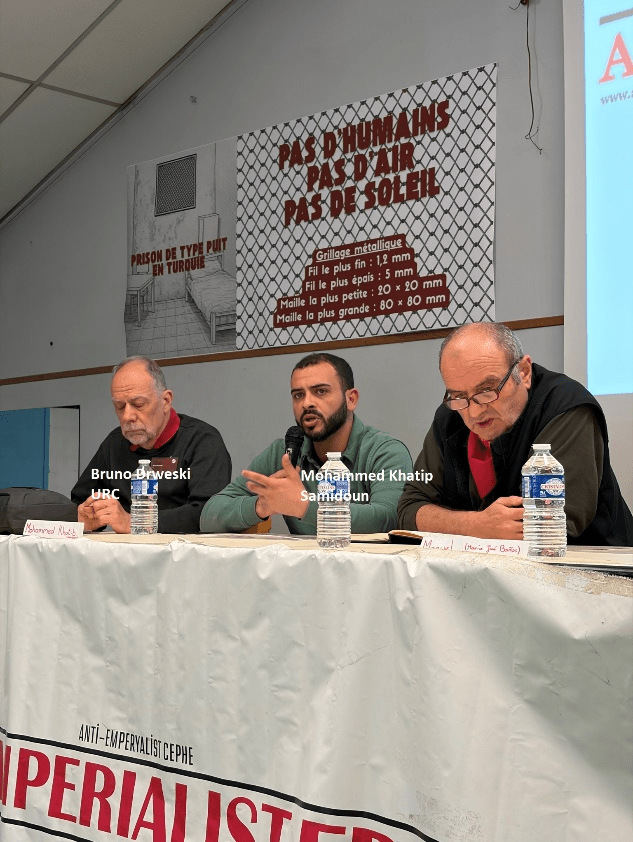
The second panel began with a speech by Mohammed Khatip, Samidoun’s European coordinator. He spoke about the oppression in Palestine, the suffering endured by Palestinian prisoners, and the new death sentence issued by Israel.
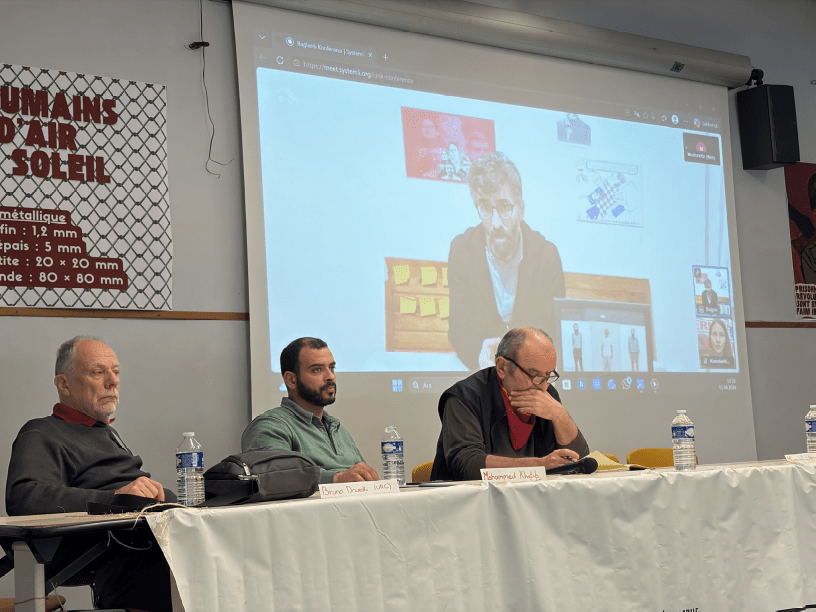
Doğan Karataştan, who joined the broadcast live, spoke about the “pit-type” prisons in Turkey and the struggle against them.
Doğan Karataştan, a veteran of the hunger strike, is a resistance fighter who undertook an indefinite hunger strike lasting 155 days at the Çorlu “pit-like” High Security Prison and achieved victory when his demands were met. Karataştan said: “Our struggle is a struggle for socialism against imperialism. No matter what happens, no matter how much pressure is applied, no matter how much pressure we face in prison, we will resist to the very end.”
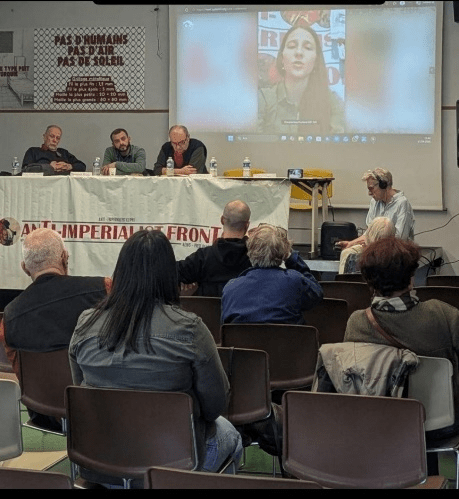
The third speaker was Konstantina Kartsioti, a representative of the Anti-Imperialist Front. She spoke about the Ampelokipoi trial currently underway in Greece. She stated that Greece’s anti-terrorism laws were enacted solely to criminalize revolutionaries. She emphasized that all cases brought under this law are political in nature.
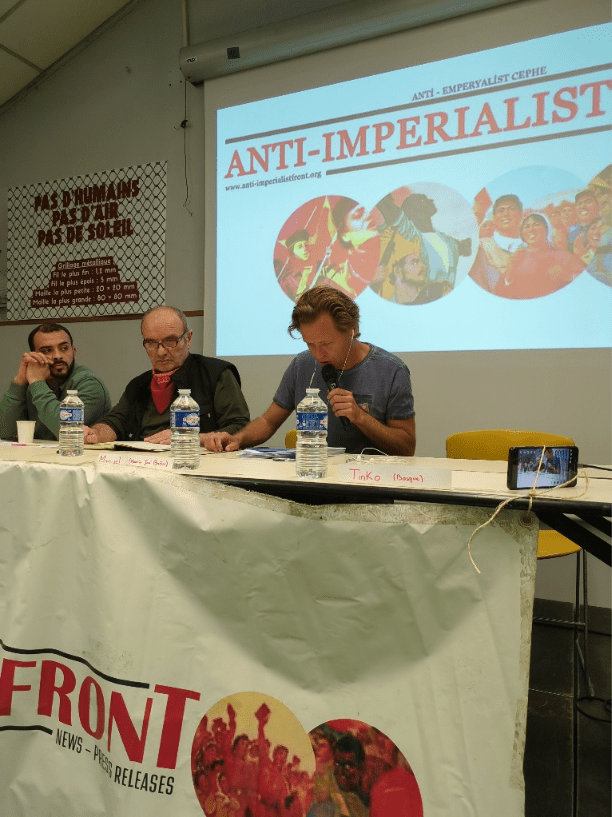
A message from the Tinko organization in the Basque Country was read aloud. “We are going through difficult times in which capitalism is revealing its most aggressive face. It enables the most reactionary elements to impose fascist rule, instigates imperialist wars, and, among many other things, arms the streets.
It is the class struggle and the oppressed peoples who will resist all forms of barbarism and the torture, executions, imprisonment, and denial of medical treatment in prisons of which they are direct victims.
Bruno Drweski, a representative of the URC organization, spoke about the Ukrainian Communist brothers Konnonoviç. The brothers have been under house arrest for four years and have had shackles placed on their feet.
Ukraine is resorting to all sorts of schemes to murder two anti-fascist brothers.
So far, these attempts at murder have been thwarted only through international solidarity.
A statement was read by Alejandra Matamanos Alexandrova, the lawyer for Maria Jose Banos, a prisoner on the brink of death. Banos is a Grapo prisoner, over 60 years old, and has spent more than 20 years in prison. During this time, her health has steadily deteriorated. She is currently in very poor physical condition and on the brink of death. Although a court ruling mandates her release, Banos continues to be held in prison without receiving medical treatment.
Third panel
The first talk focused on İlker Alcan, a political prisoner in France.
Like Zehra Kurtay, İlker Alcan was prosecuted for participating in protests and the Fête de l’Humanité.
Alcan’s wife spoke, and her remarks were translated into Turkish on stage.
She stated that her right to visit him was constantly being violated. She also noted that not only were her letters not being delivered, but the money she sent was not reaching him either. She called for continued support.
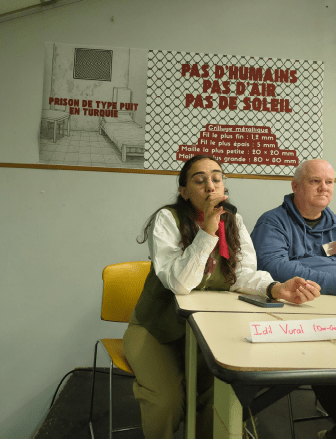
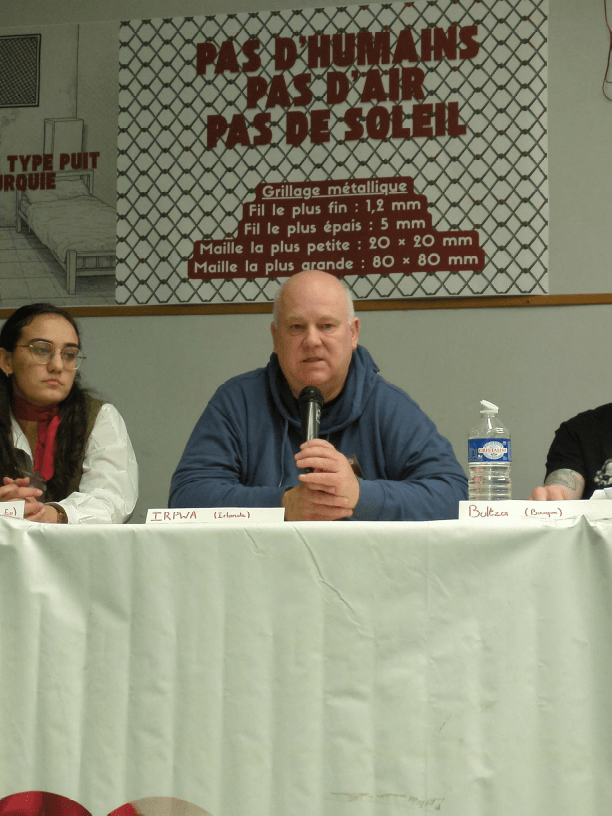
Sean Hanna, an IRPWA representative from Ireland, reported on the situation of prisoners in Ireland. He stated that revolutionary prisoners are subjected to constant pressure and torture, are beaten, have their right to medical treatment denied, and are held in complete isolation for 23 hours a day under conditions similar to those in a “pit-type” prison.
He stated that people like him, who have no criminal record, are constantly threatened and harassed because of their activities and lifestyle. Furthermore, he reported that even their families have been targeted.
From Italy a representative of the “Vogliamo rompere un tabù” initiative, spoke about Italy’s 41bis law. He also touched on the six-month hunger strike organized by Alfredo Cospito. He emphasized that 730 prisoners in Italy are currently subject to 41bis conditions and that this prison practice is becoming increasingly widespread.
The 41bis regime is a policy of strict isolation and dehumanization.
The speakers also introduced the “We Want to Break a Taboo” campaign. They stated that the campaign’s aim is to strengthen solidarity with political prisoners in Italy, secure their release, and simultaneously expand the anti-imperialist struggle.
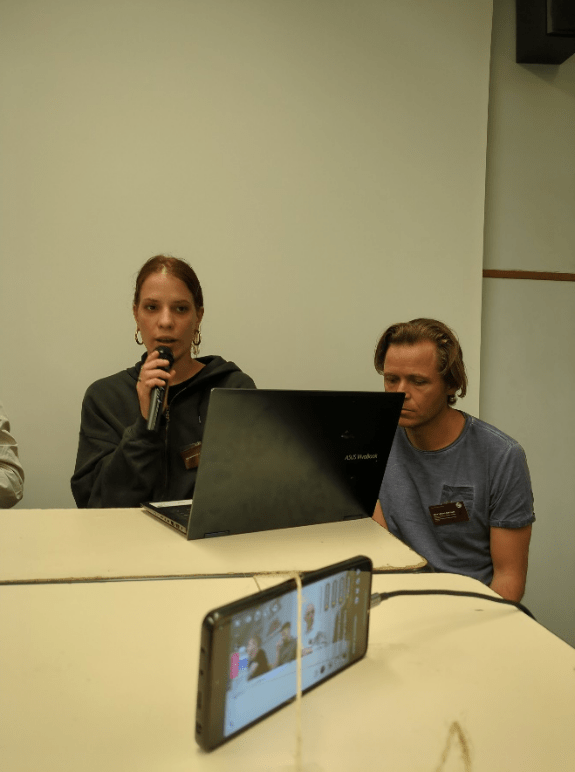
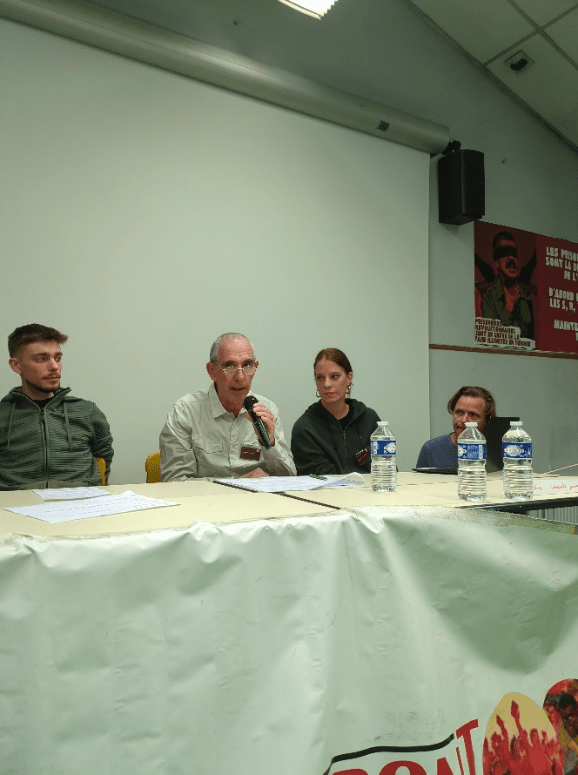
A video by OLEP, an organization based in Mexico that carries out solidarity activities with political prisoners, was shown.
A statement sent by the German organization Netzwerk für politische Gefangene (Network for Political Prisoners) regarding the case of Daniela Klette was read aloud.
Next, the Basque organization Bultza spoke. It emphasized that the Basque Country is under the occupation of the Spanish state, but that the people continue to fight for liberation and socialism.
It stated that the French state is an occupying, colonial, and imperialist power.
It noted that even countries that have achieved independence remain dependent on it. For this reason, they stated that they demand independence not only for the Basque Country, but also for Catalonia, Corsica, Brittany, French Guiana, Guadeloupe, Martinique, Mayotte, French Polynesia… Bultza emphasized that a fundamental principle for a Marxist-Leninist organization is the defense of the peoples’ right to self-determination.
He emphasized that they would fight until they achieved independence and established the Basque Socialist Republic.
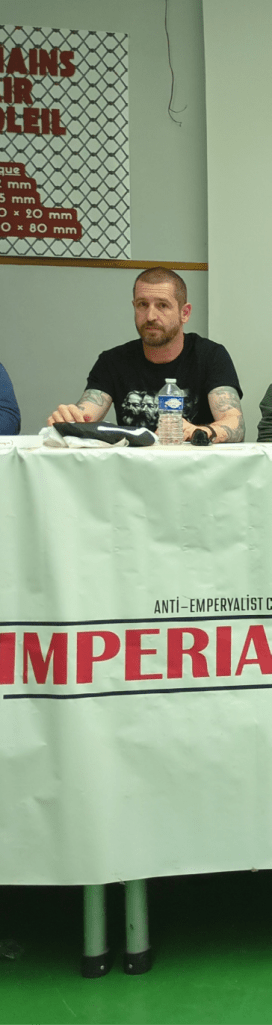
Mumia Abu-Jamal’s attorney, Noel Hamrahan, joined the event online and provided information about Mumia.
At the end of the conference, the members of Grup Yorum gave a short concert to conclude the event.
Most of the participants stayed one more day and eventually visited Zehra Kurtay in her tent. Thus, the conference that began with Zehra Kurtay’s opening remarks concluded with a visit to Zehra Kurtay.


Leave a Reply