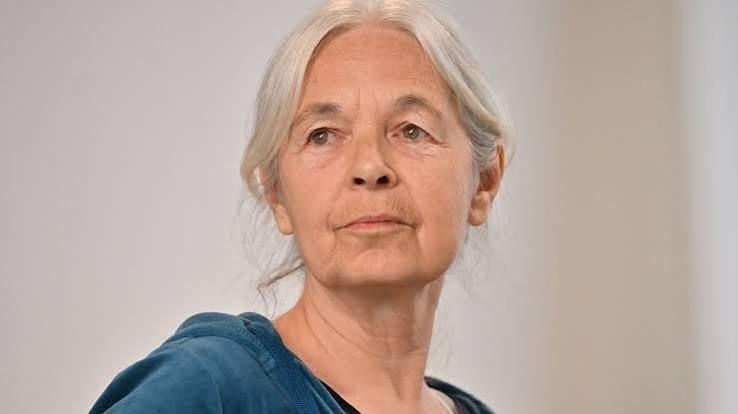
The following letter was sent from Daniela Klette in Germany to political prisoner in Turkey, Fikret Akar. In the letter you also can read information about Daniela’s situation and trial.
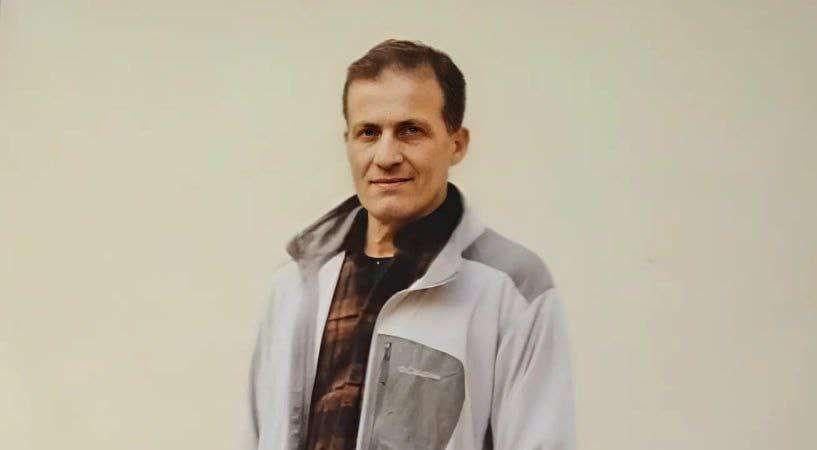
Fikret Akar is one of the political pirsoner, who has been on an indefinite hunger strike against pit-type isolation pirsons. He resisted for 250 days and achieved a victory, after being transfered from the pit-like high security prison of Corlu to antoher prison.
As many other political prisoners, Fikret Akar was imprisoned without evidences based on false statements and accusations. His trial will take place on 17th September.
Fikret Akar should be released,
Justice for Fikret Akar and all political prisoners!
Vechta, 1 August 2026
Dear Fikret,
I was very happy to receive your letter and the greetings and love from all the Özgür Tutsaklar (Free Prisoners) in the F-Type Prison in Tekirdağ. I send you warm greetings in return.
Your letter arrived here around 11 July, and only now have I found the time to write to you. Please forgive me for taking so long to reply!
The first trial against me—in which I was initially sentenced to 13 years for raising funds to support life in hiding—ended on 27 May 2026.
Both my defence team and the prosecution filed appeals. The prosecution is seeking a conviction for attempted murder and a 15-year sentence.
Up until 27 May, I went through a long and very exhausting period. The trial began in late March 2025. I spent months working on a closing argument in which my aim was to make the period of radical struggles in the 1970s, 1980s and 1990s—and the long life in hiding that resulted from them—more tangible for younger comrades and everyone else through my own story.
In doing so, I also wanted to make the background to the show trial staged against me more understandable. As your wife told you, I have been persecuted for decades, among other things in connection with these struggles of 40–50 years ago.
It is very difficult to summarise all of this briefly in a letter.
You know that 1989 marked a profound turning point for all revolutionary movements and those fighting for liberation. In its aftermath, armed groups in West Germany, Italy, Spain, France, the Basque Country and Ireland either disbanded, failed to reconstitute themselves following arrests, or became active as legal political groups. In the FRG, even after this dissolution, the manhunt for me and two other comrades continued.
It had been a free decision by the comrades to declare that their previous conception of struggle was historically over and finished, in order to make way for the search for new concepts of struggle.
The FRG state, however, seeks total subjugation in every confrontation with radical resistance. Thus, its greatest concern was still to assert its great “omnipotence”—at least over us—as a deterrent and a warning to all those who are resisting today and opposing the destructive developments of the capitalist, imperialist and patriarchal system.
And especially during this period—which those in power in the Federal Republic of Germany call a “turning point” and which has led to militarisation and preparations for war—their aim is to discipline and suppress whatever resistance is emerging and developing.
Through the trial against me and the manhunt for us as “violent criminals dangerous to the public” who would supposedly be willing to kill for money—which is completely absurd to people on the radical left—their aim was also to tarnish the memory of past struggles by defaming them as brutal and terrorist.
I lived in hiding for more than 30 years, but because of a careless mistake I was finally caught in February 2024 and arrested in Berlin.
Everything that happened afterwards proved just how right it had been to evade state persecution, even though there were no longer any active resistance movements operating underground in the FRG. I am very glad that my two comrades, Burkhard Garweg and Volker Staub, were able to evade arrest, and I hope with all my heart, along with many others, that they will never be caught.
Since my arrest, the slogan “Love and Strength—in the underground and in prison” has always brought me joy. This refers, of course, not only to me and my comrades, but also to the growing number of political prisoners and to all those who evade state control and its plans and instead devise their own self-determined plans for their lives.
I am facing another trial, which will deal with a militant attack on a Deutsche Bank data centre in 1990, shots fired at the U.S. Embassy in Bonn in 1991 in protest against the U.S.-led war against Iraq, and the blowing up of the prison building in Weiterstadt in 1993, when it was nearing completion.
You asked for my assessment of my legal situation. All of this is a matter of political decisions. There is still a major effort by the state to condemn past resistance activities and put its stamp on everything. That is their way of “disposing of” history: through decades-long prison sentences.
As in the last trial, this one is also set to proceed on charges of attempted murder, even though not a single person was injured in any of these actions.
Both Burkhard Garweg and I have written extensively about all of this, and our writings have been made public.
I have already read quite a bit about the Pit-Type prisons and your struggle against them, and I understand that these prisons are a horror.
For many years, political prisoners in the FRG staged hunger strikes against solitary confinement, fighting first for normal prison conditions and later to be brought together with other prisoners. The peak of that struggle was between 1973 and 1989. I am sure you know about that?
Solitary confinement is an export from Germany. As you write, it has only existed in Turkey since the early 2000s.
How heartbreaking that so many comrades lost their lives in your struggle against this! At the same time, it is encouraging that, thanks to your continued struggle, you were transferred out of the Pit-Type prison and can now live together and bring your creativity into both your lives and your struggle.
Were the other four comrades also transferred? Have the Pit-Type prisons been closed? Can the three of you have contact with the other seven prisoners or with other prisoners in your current prison?
I used to listen to Grup Yorum’s music a lot. You could buy it on cassette. There were Turkish and Kurdish songs that, unfortunately, I could not understand.
I tried at least to understand the titles. One was about “nargile”, which I think means a hookah or water pipe. The other was about “Daye”, which I think means “mother” in Kurdish. Right?
It has been such a long time. Your comrade Rıdvan Akbaş was surely still too young at the time to have been there back then.
I have always been very interested in the music of the many international liberation and resistance movements, which is why I listened to Grup Yorum, the Basque punk band Kortatu, Slime and Ton Steine Scherben, as well as Victor Jara, Daniel Viglietti, Manu Chao, Miriam Makeba, Fairuz, Silvio Rodríguez and Fela Kuti.
But also, Cuban salsa and Afro-Brazilian music… a rich diversity that never ends and that I cannot even begin to list.
Unfortunately, I have never seen Grup Yorum live, even though they have performed in Germany, if I remember correctly.
I find it incredibly empowering to make music together, to dance, or simply to enjoy it. That helps me understand why groups such as Grup Yorum are targeted.
When I was outside, I danced a lot and, for a while in Berlin, I joined a capoeira group. Capoeira is an Afro-Brazilian martial art in which people make music together, sing and practise capoeira—in pairs in the centre—and dance to the music.
In here, I do not listen to music very much, only now and then. I do not have a very large selection—just a few CDs—and I do not sing anymore either. That would be more fun together too.
Everything I have just written about this came to mind in response to what you wrote about creativity, and I feel exactly the same way as you do.
Is there anything you can do about the pain in your foot? Is it caused by poor circulation? Are you able to exercise?
I am the only political prisoner here in Vechta from the internationalist, anti-capitalist resistance movement who also has such a long history. If there were another prisoner from the radical left here, they would separate us.
Since I have been in pre-trial detention—for more than two and a half years now—the women I have contact with here have constantly changed. Many are convicted and then transferred to other wings; fortunately, some are released immediately, because women are often detained here on absurd charges—for shoplifting from a drugstore, stealing expensive alcohol or perfume, not paying for a bus ticket, missing a court date…
I have already met quite a few women here whom I liked—and who liked me in return—with whom I was able to do positive things in our daily lives, such as cooking together, learning a language, running laps in the courtyard during free periods, talking about problems in prison and supporting one another.
But having in-depth discussions about the state of the world, the wars, the arms race, the climate crisis, changes in society with the rise of the far right and self-righteous attitudes, ongoing impoverishment and hate speech against migrants… that is not so easy, if only because of the language barriers.
For many women, it is simply too much.
As reports came in every day about the massacres of Palestinians, including the killing of so many children, some women told me that they could not bear it, nor could they bear their own helplessness in the face of it. They would rather turn off the television.
Many are so consumed by their own problems and fears that they have little capacity for anything else. In pre-trial detention, they do not even know how long they will have to remain in prison.
I would give a lot to be able to talk to at least one person about everything in my daily life. I would even like to talk to someone about this letter to you before sending it, so that I could ask: “Do you think this makes sense? Is anything important missing, or is anything uninteresting?”
That is also why the process was so exhausting for me—because I could hardly discuss my statement with anyone and spent hour after hour reworking and rewriting everything. I did not always stop even at night.
But I think that is simply the way it is. And as long as I can convey something that is important to me, it is good—even if it takes me a very long time and could have been made better through criticism and discussion.
Since the beginning of May, I have had more free time and can spend much more time with the women here in the corridor. I made full use of that after the trial.
Unfortunately, they will not let me go to the gym with the other women. I would really enjoy that because I have a strong need to be physically active.
I am only allowed to go to the gym if a trainer or member of staff is present—in other words, only under supervision. And since there is so far only one person who does this, and he only comes every few weeks, I hardly ever get to exercise with others and have to discipline and guide myself.
Until my arrest, I got plenty of exercise outdoors—several hours every day—because I lived with a dog who also needed a great deal of exercise. Nothing here can replace that.
But I am trying my best to remain active here as well. I will be turning 68 soon, and I notice how quickly my physical condition declines if I do not do anything about it. I have also had periods here when I was simply tired, and then I lack the energy even to think.
I read the left-wing daily newspaper Junge Welt every day—when it arrives here.
At weekends, I read the left-liberal newspapers ND and TAZ. These two are now only published in print at weekends. With the weekly TAZ, I receive the German edition of the monthly magazine Le Monde diplomatique, which contains many analyses of the state of the world, wars, AI and the climate crisis. Much of it is interesting.
Reading this material is very important to me for staying connected to the world and to a wide variety of resistance activities.
I need a lot of time each day for this. When it comes to reading and writing, I am very slow.
Right now, I am also reading books—some of them written by former prisoners and revisiting the history of the 1970s to the 1990s, but also books analysing today’s global situation, which in many ways is reminiscent of the period before the world wars and yet at the same time is so different.
This is especially so when you consider the threats to life that have grown alongside one another, such as the climate crisis, technological developments, the development of AI for the benefit of capital, and the penetration of capitalism into every area of society, especially in the still wealthy countries of the West.
And as you say, the left is not very strong right now. There is hope that all these initiatives of resistance, which genuinely exist throughout the world, will come together and have a collective impact that can, first of all, stop or prevent wars.
But at the same time, they would also have to be capable of developing a different way of managing the economy and organising life, and of building this against the constraints inherent in capitalism and its growth-driven pursuit of profit.
So many questions…
By the way, so far, I have been a terrible letter writer. I receive a lot of mail and a great deal of solidarity, which makes me incredibly happy. But I do not always manage to reply to everyone quickly.
I hope to improve in this regard, though, once I no longer have any trials.
I am sending you warm greetings and solidarity, and I look forward to hearing from you again.
Daniela
 INTERNATIONAL SOLIDARITY FOR POLITICAL PRISONERS (IS4PP)
Leave a comment